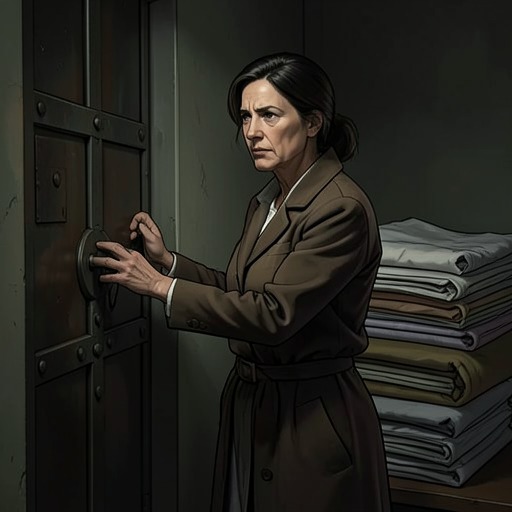
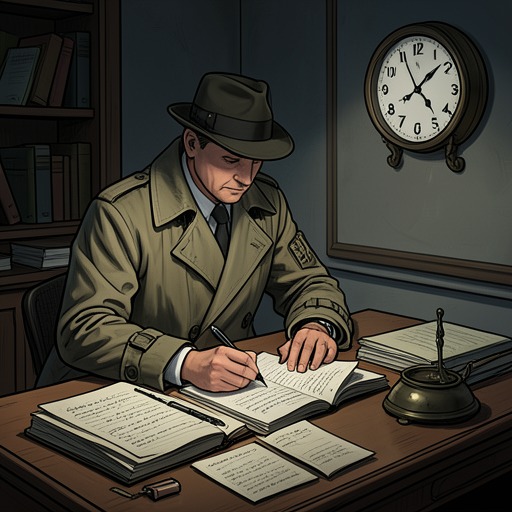
Michelle McNamara—Kathleen Lombardo
I'll Be Gone in the DarkMichelle McNamara—Kathleen Lombardo is a posthumous, one-sided relationship: McNamara did not know Kathleen Lombardo, but Lombardo’s unsolved murder became the event that first drew McNamara into the pursuit of unanswered crimes. The connection began when McNamara was fourteen and continued through adulthood, as she returned to the case in her writing and investigative work. Its defining feature was an absence that never resolved: the victim was known, but the person responsible was not.
An Unsolved Murder Close to Home
On August 1, 1984, twenty-four-year-old Kathleen Lombardo was jogging with her Walkman along Pleasant Street in Oak Park, Illinois. Neighbors saw her at about 9:45 p.m. The attack took place only about three-tenths of a mile from McNamara’s home. McNamara was fourteen, living in the attic bedroom that had become her private space before starting high school. Her family knew the Lombardos through St. Edmund’s, making the case part of a familiar community rather than a distant crime story.
Two days after the killing, McNamara went to the place where Lombardo had been attacked without telling anyone. She found and picked up pieces of the shattered Walkman. Before then, her interest in crime had been slight, apart from reading occasional Nancy Drew books. The visit became a turning point: McNamara recalled that what seized her was not a settled answer about the crime, but the unfilled space where the killer’s identity should have been. The object she carried away connected an ordinary personal possession to an unresolved question, and the question endured after the immediate event had passed.
From an Encounter to a Lifelong Pursuit
McNamara later described Lombardo’s murder as the first case to mark her. The incident gave an origin to an interest that had not previously been central to her life. She began collecting details about unsolved crimes and associating places and people with cases that remained unresolved. In her account, Lombardo’s murder was the point to which she returned when asked why crime held her attention: the memory was anchored in the fragments of the Walkman and in the continuing absence of an identified killer.
That early fixation did not remain confined to private recollection. In her mid-thirties, McNamara created True Crime Diary, a website devoted to cold-case homicides. She also wrote about Lombardo’s case from time to time and mentioned it in interviews. Her adult work thus carried forward the question that first took shape when she was fourteen. The case was not simply a childhood memory she had outgrown; it became a recurring reference point for explaining how she came to investigate crimes whose central facts remained incomplete.
Returning to the Case
McNamara sought to check details directly with the Oak Park Police. The one substantial lead she recalled was a witness report of an African American man in a yellow tank top and headband watching Lombardo as she jogged. Police also debunked a rumor McNamara remembered—that witnesses had seen the killer leave the El train and begin following Lombardo. The distinction mattered: an evocative account of how the killer might have arrived was not evidence the police accepted.
The police gave McNamara the impression that the case had reached a dead end. That assessment preserved the central tension of her connection to Lombardo: McNamara could revisit the investigation, check remembered claims, and record the limited lead, but those efforts did not identify the killer or resolve the case. The murder remained unsolved, and the lack of a conclusion was itself part of what kept the case present in her thinking.
Other Witnesses and the Unfinished Legacy
Years later, Dan Olis and Terry Keating contacted McNamara. They were cousins and, like her, remained haunted by Lombardo’s murder, though for more personal reasons: they had been among the St. Edmund’s boys who found her. Their account challenged what they regarded as the accepted explanation of what had happened that night. They believed they knew the killer’s identity, but their belief did not amount to a resolution in the account McNamara recounts.
Their approach altered the case’s place in McNamara’s understanding. It showed that her attachment to Lombardo’s story was not unique, while also bringing forward a perspective rooted in direct experience that differed from her own adolescent discovery of the case. Yet the communication offered no final answer. The relationship between McNamara and Lombardo remained one formed through memory, research, and an unanswered crime: Lombardo’s death initiated McNamara’s sustained pursuit of unknown offenders, while the identity of Lombardo’s killer remained unresolved.